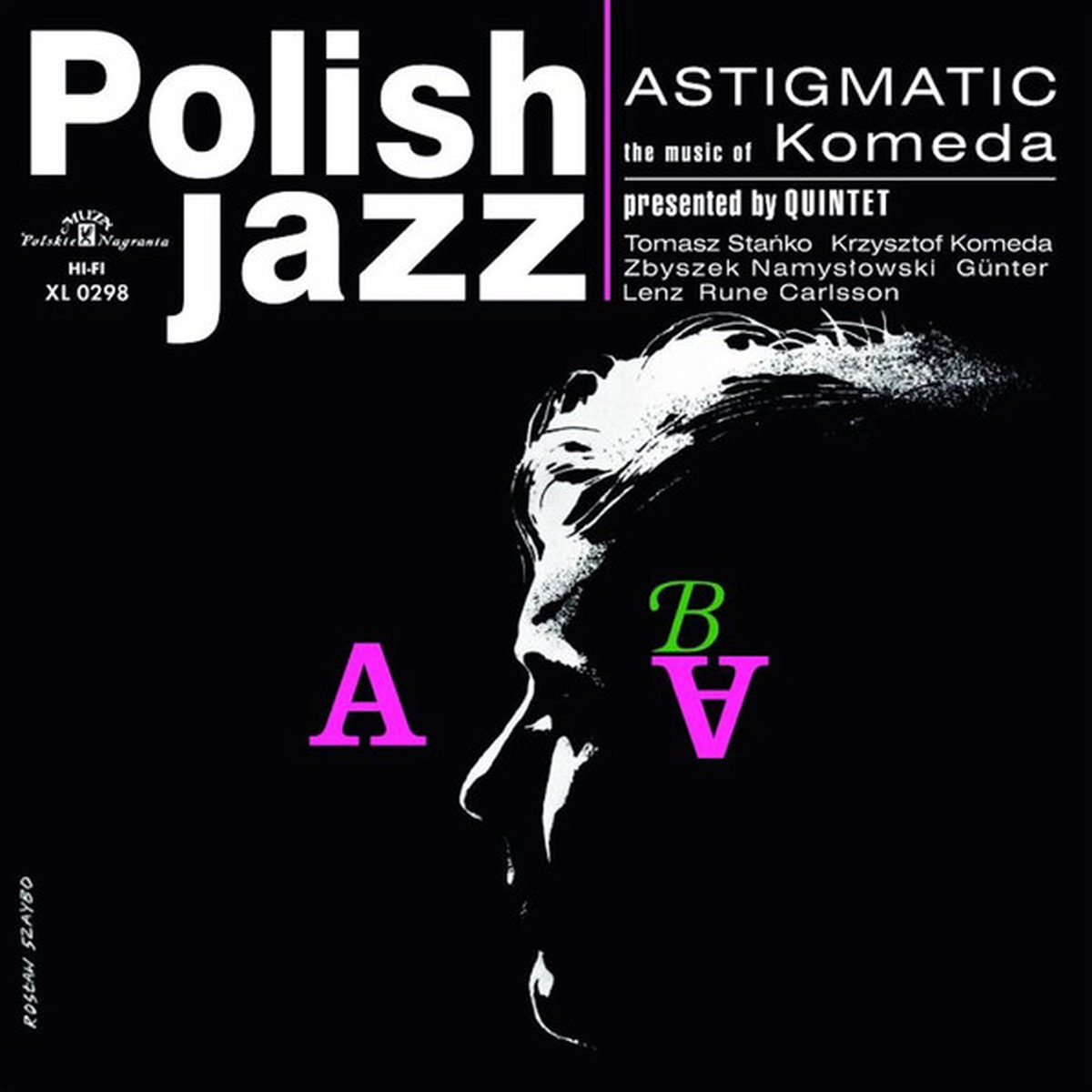
There is a moment about ninety seconds into the title track where the music stops explaining itself. Komeda's piano has laid out something spare and unresolved, Stańko's trumpet has entered high and thin, and then the whole ensemble simply commits to a direction nobody announced. Twenty-two minutes later it arrives somewhere. What happens in between is the reason people still argue about this record sixty years on.
Astigmatic was recorded in December 1965 and released the following year as the fifth volume of Polskie Nagrania's Polish Jazz series. By any ordinary measure it should have been a provincial document — a state-owned label in a country sealed off from the American scene, recording five musicians in Warsaw for an audience that could not easily buy records. Instead it became the album that told European jazz it did not have to sound American.
That was not a manifesto. It was a set of specific decisions. Komeda wrote in long spans rather than choruses, so the music moves in weather systems instead of thirty-two-bar blocks. Harmony shifts without resolving, and the tonal centre keeps sliding out from under the soloist. Tension comes from narrative rather than from chord changes — the pieces build the way a film builds, which is unsurprising from a composer who spent much of his working life writing for Polanski.
The band is what makes it more than an idea. Tomasz Stańko was twenty-three, already playing with the cracked, keening tone that would define him for the next fifty years, and already refusing to fill space he did not need. Zbigniew Namysłowski answers him in a warmer register, closer to the tradition, which gives the front line a genuine argument to have. Günter Lenz and Rune Carlsson — a German bassist and a Swedish drummer — hold it together without ever settling into a groove you could tap along to. The rhythm section keeps the floor unstable on purpose.
"Kattorna" is the shortest piece and the most direct, a theme Komeda also used in his film work, played here with a bluntness that throws the surrounding material into relief. "Svantetic" closes the record in memory of the Swedish trumpeter Svante Foerster, and it is the most openly free of the three — the point where the group stops circling and simply plays.
What is remarkable, hearing it now, is how little it has aged. The recording is dry and close, the reverb minimal, the balance unfussy. There is no period production to see past. It sounds like five people in a room making decisions in real time, which is exactly what it was.
Poland produced a great deal of extraordinary music in those decades and very little of it travelled. Astigmatic is the exception that proves how much else there is — the record that got out, got heard, and made the case. Everything else in this series exists in its shadow, which is both a compliment and a problem: the shadow is large enough that people stop looking.
Start here. Then keep going.